

HACCP Compliance and Scheduling in Fast Food

Last updated:
3/4/2026
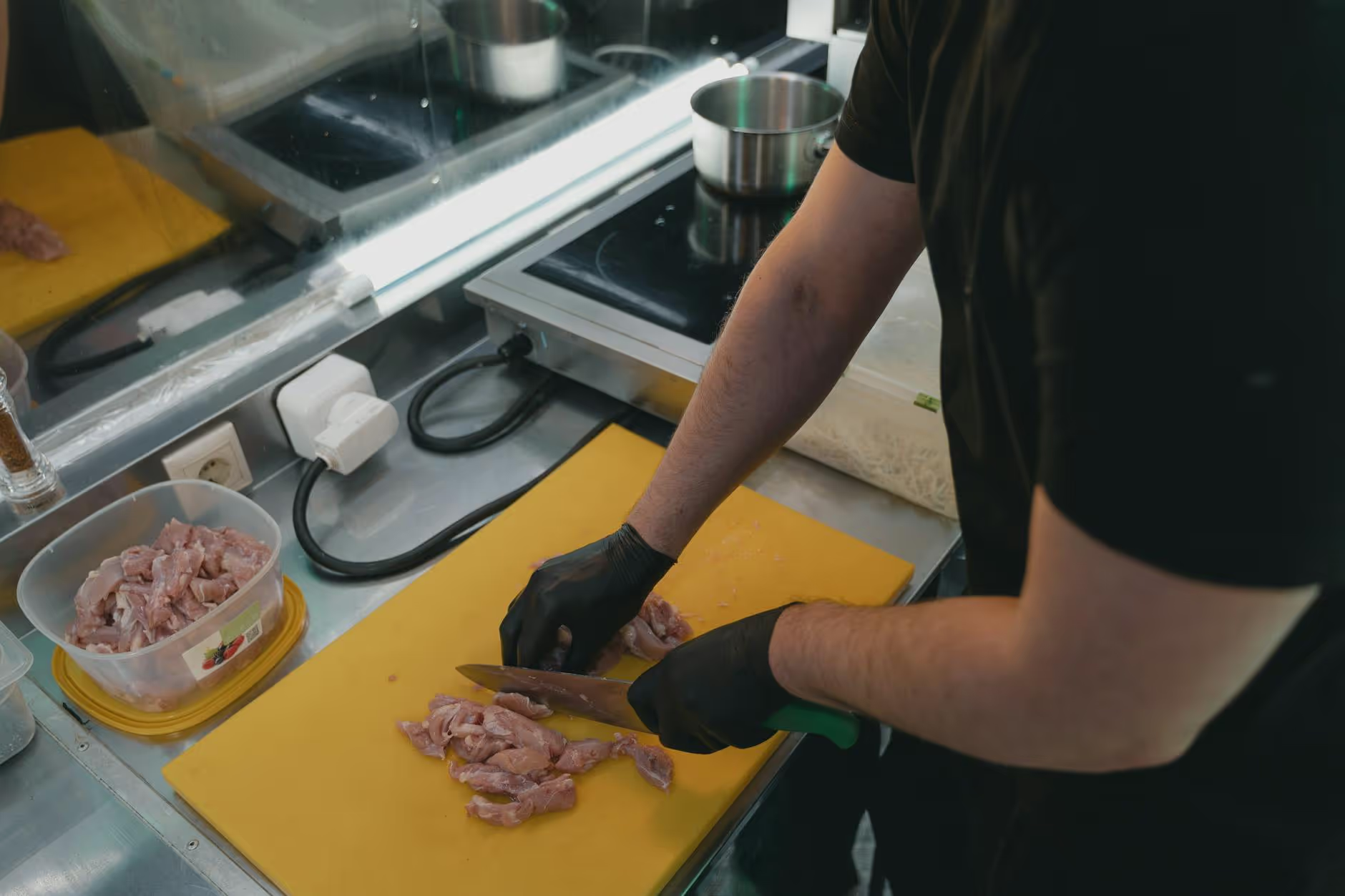
In brief: In fast food, HACCP compliance requires trained staff to be present at every shift. The schedule must guarantee that no slot runs without a certified hygiene supervisor. Shyfter lets you embed HACCP competencies in scheduling, track training dates, and prove compliance during food safety inspections.
HACCP in Fast Food: What the Law Requires
The HACCP (Hazard Analysis and Critical Control Points) system is mandatory for every establishment handling food. In Belgium, the FAVV (Federal Agency for the Safety of the Food Chain) monitors compliance with these standards. In France, the DDPP (Departmental Directorate for the Protection of Populations) fulfils this role.
For a fast food restaurant, HACCP obligations cover the entire chain: goods reception, storage (cold chain integrity), preparation, cooking, assembly, service, and cleaning. Each step has critical control points where a lapse can create a health risk.
The fundamental requirement: at least one person trained in food hygiene must be present during each service. That person must have completed an accredited training course and be capable of supervising HACCP procedures on the floor. In Belgium, the HACCP officer must be able to present their training certificate during an inspection.
The Link Between Scheduling and HACCP Compliance
Why the Schedule Is a Compliance Tool
HACCP compliance is not just about training. It plays out in daily scheduling. A restaurant that has trained 5 employees in HACCP but schedules a Saturday evening shift without any of them is not compliant. The training exists, but the operational coverage does not.
The schedule is the document that proves your restaurant maintains continuous HACCP coverage. During an inspection, the inspector may ask who the hygiene officer on duty was at a given time and date. If the schedule does not show this, there is a problem.
High-Risk Situations
Several scenarios create gaps in HACCP coverage in fast food. The most common: peak-hour shifts composed mainly of untrained student workers. During rush hours, the restaurant calls in additional staff, often student workers or flexi-job (Belgian employment type) workers who have not completed full HACCP training.
Another frequent situation: the unplanned absence of the hygiene officer. A HACCP-trained employee is sick on a Saturday. The other two trained employees are not working that day. The restaurant operates all day without HACCP supervision — technically, that is a violation.
A third risk: morning opening shifts (preparation, opening). The setup involves goods reception, temperature checks, and storage. These tasks are critical from a HACCP standpoint and must be carried out by trained staff. Scheduling an opening shift with only untrained personnel is a risk.
Embedding HACCP Competencies in the Schedule
Tagging Trained Employees
The first step is to clearly identify which employees hold HACCP training in your scheduling system. In Shyfter, each employee can be tagged with their skills and certifications. The "HACCP" tag signals that the employee has completed training and is authorised to supervise hygiene procedures.
This tag is more than a visual indicator. It becomes a scheduling constraint. When a manager creates a shift, the system checks that at least one HACCP-tagged employee is present. If not, an alert appears before the schedule is confirmed.
Automatic Coverage Rules
The franchisee defines a rule: "At least 1 HACCP-certified person on every shift, at every site." This rule is applied automatically in Shyfter. The manager cannot confirm a schedule that does not meet this constraint. For high-traffic time slots, the rule can be strengthened: "At least 2 HACCP-certified people during the lunchtime shift (11am–2pm)."
These rules work the same way as the constraints of Joint Committee 302 (Belgian hospitality collective agreement): they are built into the system and checked automatically, without the manager having to think about it every time they schedule.
Alerts on Absence
If the only HACCP-certified employee scheduled for a shift calls in absent, the system detects the coverage gap. An alert is sent to the manager with the list of available HACCP-qualified employees who can step in. The manager can react immediately instead of discovering the problem mid-service.
Scheduling HACCP Training
Initial Training
Every new fast food employee must receive basic food hygiene training. In Belgium, the duration and content of this training are regulated. For food-handling roles in fast food, a one-day training covers the basics: cold chain, cleaning, cross-contamination, allergens, and traceability.
Training days must be integrated into the schedule. An employee in training is not available for service. Scheduling training on a day when the restaurant is already understaffed creates an operational problem. Shyfter allows training slots to be blocked in the schedule, just like leave or a planned absence.
Refresher Training and Updates
HACCP training is not a one-time event. Certificates have a validity period (generally 1 to 3 years depending on the type of training and local regulations). Procedures evolve. Food safety authority inspections check that training is current.
Shyfter records each employee's training date and certificate expiry date. An alert is sent 60 days before expiry, leaving time to organise a refresher. The manager schedules the refresher session in the planning tool, and the certificate is updated in the employee's profile after training.
Training Enough People
The temptation is to train the minimum: one or two employees per restaurant. This is a trap. With high staff turnover, those employees can leave within months, leaving the restaurant without HACCP coverage while their replacements are being trained.
Best practice: train at least 30 to 40% of the permanent team. If you have 12 employees on permanent or stable contracts, at least 4 should be HACCP-certified. This guarantees coverage across all time slots, even during multiple absences.
Food Safety Inspections: What the Inspector Checks
How an Inspection Unfolds
A food safety inspection in fast food is generally unannounced. The inspector arrives without warning, often during service. They check temperatures, cleaning procedures, product traceability, the state of the premises, and the training of staff on site.
On the training side, the inspector may request the HACCP certificate of the hygiene officer present. They may also ask for the establishment's training plan: who is trained, when the last training took place, and when the next refresher is scheduled.
What Shyfter Provides
During an inspection, the manager can pull the following information from Shyfter in a few clicks: the list of HACCP-trained employees with their training and expiry dates, the schedule showing the presence of a hygiene officer at each shift, the training history, and any coverage gap alerts that were resolved.
These data make up a solid compliance file. The inspector sees that the establishment has a tracking system, that training is current, and that coverage is scheduled. That is the difference between a restaurant that "does HACCP" and one that can prove it.