

Event Security Scheduling
In brief: Event security is governed by law: certified officers, ratio per number of spectators, continuous access coverage. A poorly designed security schedule exposes the organiser to penalties and real risks for the public. This guide covers legal requirements, security team sizing, post rotation and coordination with other teams. Shyfter integrates certification management and security scheduling into your event scheduling tool.
Why event security is a special scheduling category
Security is not a role like any other. A missing waiter means slower service. A missing security officer means a risk to the public. The obligations are legal, not merely operational. The event organiser is responsible for the safety of everyone on site. This responsibility requires rigorous security scheduling, qualified officers and uninterrupted coverage.
In Belgium, security and surveillance activities are governed by the Act of 2 October 2017 regulating private and specific security. Officers must be certified, security companies must be approved, and operating conditions are strictly regulated.
The legal framework for event security in Belgium
Compulsory approval
Event security activities must be carried out by companies approved by the FPS Interior. If you are a caterer or event agency, you cannot assign your own casual workers to security roles (with limited exceptions). You must either subcontract to an approved security company or employ officers holding the required identification card.
Officer certification
Event security officers must hold an identification card issued by the FPS Interior. This card certifies that the officer has completed the required training and meets the legal conditions (clean criminal record, psychotechnical exam, ongoing training). An officer without a card is an illegal officer at your event.
The schedule must verify that each assigned officer holds a valid card. Shyfter stores the certifications of each officer in their profile and alerts when a card approaches its expiry date.
The role of the security adviser
For large events (more than 1,000 people), a security adviser must be designated. They are responsible for risk analysis, the security plan and coordination with emergency services (fire brigade, police, ambulances). The security schedule is drawn up in collaboration with this adviser.
Sizing the security team
The officers-to-spectators ratio
The number of security officers depends on several factors: number of spectators, event type, venue configuration and risk level. There is no single legally imposed ratio, but professional recommendations and local authority requirements apply:
- Low-risk event (conference, seminar): 1 officer per 200 to 300 people
- Medium-risk event (seated concert, gala): 1 officer per 100 to 150 people
- High-risk event (standing festival, rock concert): 1 officer per 50 to 75 people
- Very high-risk event (football match, political event): 1 officer per 25 to 50 people
These ratios are indicative. The risk analysis specific to the event determines the exact number.
Typical security posts
An event security team covers several functions:
- Access control: ticket checking, searches, detection of prohibited items or substances
- Zone surveillance: visible presence in the crowd, detecting at-risk behaviour
- Stage protection: pit security, crowd management at the front of the stage
- Flow management: regulating entry/exit, managing queues
- Intervention: mobile team to handle incidents (fights, medical emergencies, evacuation)
- Command post: central coordination, radio communication, liaison with emergency services
Zone sizing
For a festival of 5,000 people:
- Entrance/ticketing: 4 officers (3 entrances + 1 supervisor)
- Main stage: 6 officers (pit + sides + rear)
- Secondary stage: 3 officers
- Food/bar zone: 3 officers (general surveillance)
- Car park/camping: 2 officers
- Mobile intervention team: 4 officers
- Command post: 1 head of security
- Total: 23 officers per shift
Scheduling security rotations
Continuous coverage
Unlike waiters or hostesses, security cannot have gaps. Every post must be covered continuously during public opening hours. If an officer leaves their post for a break, a replacement must be in place before they leave. The security schedule is the only event schedule where 100% coverage is non-negotiable.
Security shifts
Security shifts are longer than service shifts (often 8 to 12 hours) but with integrated breaks. A common model:
- Shift A: 8am–4pm (setup, opening)
- Shift B: 2pm–10pm (main operation)
- Shift C: 8pm–4am (evening, closing, breakdown)
The 2-hour overlap between shifts guarantees handover. The outgoing shift's head of security briefs their successor on ongoing incidents, points of attention and site status.
Post rotation
An officer posted at access control for 8 consecutive hours loses vigilance. Post rotation every 2 to 3 hours maintains attention: 2 hours at access control, 2 hours on zone surveillance, 1 hour break, 2 hours on the mobile team, etc. The schedule must include these internal rotations.
Security coordination and other teams
The link with the main schedule
The security schedule must be synchronised with the main event schedule. Security officers are the first on site (before setup) and the last to leave (after breakdown). Their schedule frames that of all other teams.
Critical synchronisation points:
- Arrival of setup teams: site security during construction
- Doors open: access control in place, surveillance posts occupied
- Stage/show changeovers: managing public flow between zones
- Closing: managing exit, securing empty site
- Night breakdown: material surveillance, site access
Radio communication
The security team operates on an independent radio network. Each posted officer has a walkie-talkie. The head of security, at the command post, has an overview. Communication must also work with the event's production desk: the production manager must be able to reach the head of security quickly in an emergency.
Time tracking and officer monitoring
The importance of traceability
In the event of an incident (assault, accident, theft), authorities may ask who was posted, where and at what time. Geolocated time tracking provides this traceability. Each officer clocks in on arrival, the system verifies they are at the correct site, and hours are accurately recorded.
Patrol monitoring
Some security posts involve regular patrols (car parks, camping, technical areas). Geolocated time tracking can serve as proof of passage: the officer clocks in at each checkpoint, the system records the time and position. This monitoring is useful in the event of an inspection or dispute.
The cost of event security
A significant budget item
The cost of security represents 5 to 15% of a total event budget, depending on risk level and size. Certified officers cost more than waiters: 14 to 20 euros gross per hour, with night and weekend premiums on top.
For a 3-day festival with 25 officers per shift and 3 shifts per day:
- 75 posts/day x 8h x 18 euros fully loaded = 10,800 euros/day
- 3 days = 32,400 euros
- With night and weekend premiums: 38,000 to 42,000 euros
In-house security vs. subcontracting
If you subcontract to an approved security company, the billed cost includes the security company's margin (often 20 to 40% above staff cost). If you directly employ certified officers (via your own approval), the cost is lower but management is more complex (recruitment, training, certification management).
Specific requirements by event type
Standing festival or concert
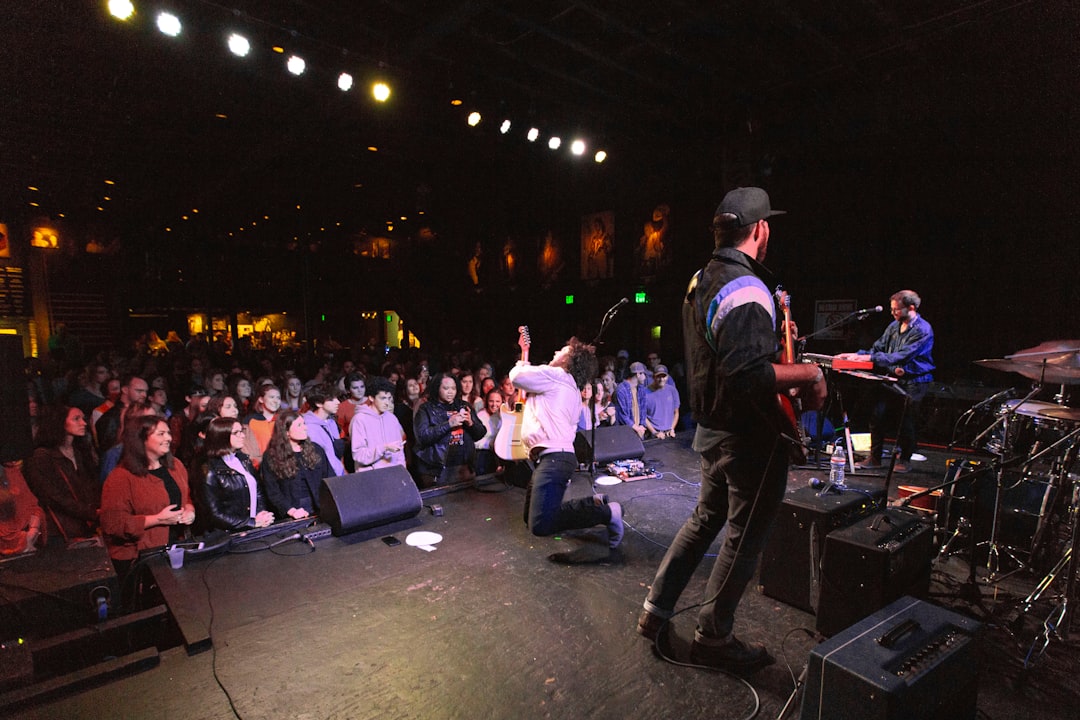
This is the most security-demanding event type. A standing crowd, alcohol, mass movements (mosh pits, crowd surfing) create high risks. The officers-to-spectators ratio must be tight (1 per 50 to 75). Stage security is critical: the pit must be managed continuously to prevent crushing.
Gala or corporate evening
Lower risk, but presence is necessary: access control (guest list), discreet surveillance, car park management. Officers must be presentable and discreet. 2 to 4 officers suffice for a 200-person event in an enclosed venue.
Outdoor event
Outdoor events (garden parties, inaugurations, ceremonies) pose additional challenges: open perimeter that is hard to control, variable weather, distance from emergency services. The security plan must include safety perimeters, evacuation routes and coordination with local emergency services.
The security plan and evacuation plan
Risk analysis
Before each event of significant size, a risk analysis is carried out. It identifies potential threats (fire, crowd movement, weather incident, attack), evaluates their probability and impact, and defines prevention and response measures.
The evacuation plan
Every event must have an evacuation plan known to all security officers. This plan defines exit routes, assembly points, each person's role during the evacuation and communication procedures. The security schedule must include an evacuation briefing for all officers before the venue opens to the public.
Managing security in Shyfter
A suitable event scheduling software handles security specifics:
- Officer profiles with certifications and validity dates
- Identification card expiry alert
- Scheduling by security post (access, zone, mobile, CP)
- Internal rotations every 2–3 hours
- Continuous coverage verified (no gap in the schedule)
- Geolocated time tracking with checkpoints for patrols
- Hour and premium tracking per officer
- Automatic Dimona declarations
FAQ
How many security officers are needed for a 500-person event?
For a medium-risk event (gala, corporate reception), plan 4 to 6 officers: 2 at access control, 2 on zone surveillance and 1 to 2 in reserve/intervention. For a standing concert of 500 people, the need rises to 8 to 12 officers: reinforced pit management, crowd management and intervention team. These figures are indicative. The risk analysis specific to your event, venue and expected audience determines the exact number. Consult local authorities (mayor's office, police zone) who may impose minimums.
Can uncertified casual workers be used for light security tasks?
No. Any security activity (access control, surveillance, searches) must be carried out by certified officers working for an approved company. Entrusting these tasks to uncertified casual workers is illegal and exposes the organiser to prosecution. However, casual workers can carry out adjacent tasks that do not fall under security: directing the public, managing queues, checking tickets (without searching). The line is sometimes fine. In case of doubt, use certified officers.
How do you manage security for a multi-day event like a festival?
Plan 2 to 3 shifts per day with overlap, and separate teams for each shift. Cumulative fatigue over a 3-day festival reduces vigilance. Rotate posts every 2–3 hours to maintain attention. Reinforce headcount on the last day and during closing nights (peak risk). Ensure permanent radio coordination with a head of security at the command post. With Shyfter, the multi-day security schedule is structured by shift and zone, with automatic verification of continuous coverage for each post.
Other events industry guides
- Events (hub)
- Event scheduling: complete guide
- Managing casual workers in events
- Joint Committee 304/302: obligations in events
- Dimona (Belgian employee registration) in events
- On-site time tracking for events
- Festival and concert scheduling
- Corporate event scheduling
- Setup and breakdown scheduling
- Student workers in events
- Staff cost per event
- Event scheduling software