

Festival and Concert Scheduling
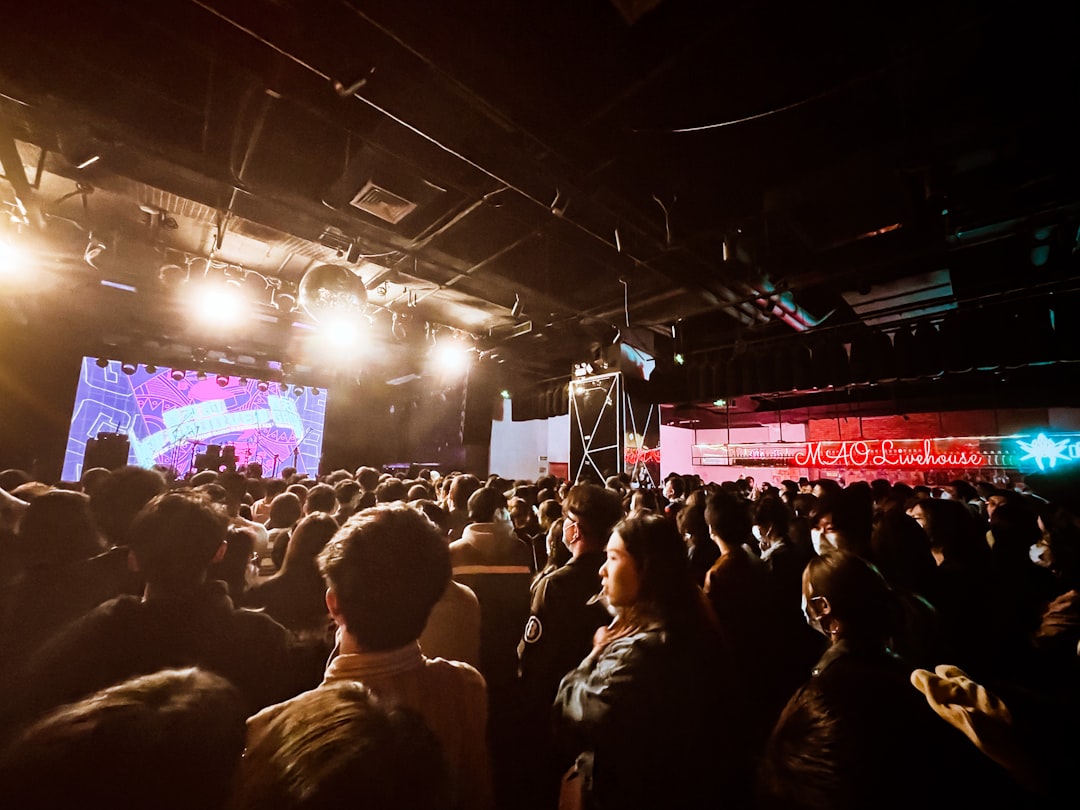
In brief: Planning a festival or concert means managing 100 to 500+ people over several days in unpredictable conditions. Shift rotations, changeable weather, offset schedules, varied profiles (technical, security, reception, catering): each festival is a massive logistics project. This guide covers staffing for festivals and concerts: sizing, rotations, weather management, pool mobilisation and real-time monitoring. Shyfter centralises the management of hundreds of casual workers across multi-day events.
Festival: the most intense scheduling challenge in events
A festival is not an event. It is a temporary city. For 2 to 5 days, hundreds of people work simultaneously on a site that did not exist the week before and will disappear the week after. Profiles are diverse: sound and lighting technicians, security officers, waiters, bartenders, reception hostesses, runners, cleaners, production managers, coordinators.
Festival scheduling differs from all other event types in three ways: volume (100 to 500+ people per day), duration (several consecutive days) and uncertainty (weather, variable attendance, incidents). A 200-cover gala is complex. A 3-day festival with 300 people per shift is a full order of magnitude above that.
Companies managing festivals without a suitable tool spend weeks on administrative work. Those using a structured system manage the same complexity in a few days.
Sizing festival headcount
Calculating by zone and role
A festival is divided into zones: main stage, secondary stages, food village, bars, entrance/ticketing, car parks, camping, backstage. Each zone has its own staffing needs, its own schedules and its own required skills.
Sizing is done zone by zone, role by role:
- Bars: 1 bartender per 75 to 100 festival-goers present simultaneously
- Catering: 1 cook per 50 covers, 1 waiter per 30 covers
- Entrance/ticketing: processing capacity of 200 to 300 entries per hour per window
- Security: legal ratio per number of spectators (varies by festival size and type)
- Cleaning: permanent team + reinforcement between sets and at end of day
- Technical: based on each artist's rider, with a permanent core team
The rotation factor
A 3-day festival with 14-hour days (10am to midnight) cannot function with the same people from start to finish. Rotation is compulsory, for both legal and practical reasons. Plan a minimum of two teams per role to cover the full day, and a third reserve team for replacements.
Concretely, a role requiring 10 people continuously needs 25 to 30 people in the dedicated pool: two rotations of 10 plus a reserve of 5 to 10 people.
The multi-day effect
Over a 3-day festival, fatigue is cumulative. Performance drops on the third day. Absences increase. Lateness multiplies. The third-day schedule must be more generous in headcount than the first day to compensate for natural attrition. Allow 10 to 15% extra staff for the final day.
Building the day-by-day schedule
The setup schedule (D-3 to D-1)
Festival setup begins 2 to 5 days before opening to the public. Teams are mainly technical: structures, stages, sound, lighting, decoration, signage, barriers. The order of intervention is strict: sound cannot be cabled before the stage is built.
The setup schedule is sequential. Each team depends on the previous one. A delay in stage structure puts everything else behind. Integrate 2 to 4-hour buffers between phases to absorb unforeseen events.
The festival day schedules
Each festival day has its own schedule, with peaks and troughs. The bar runs at full capacity at 10pm but is quiet at 2pm. Entrance is saturated at doors-open but empty at 8pm. The schedule must reflect these variations: 6 to 8-hour shifts, staggered by zone.
A typical structure:
- Morning shift: 8am–4pm (daily setup, cleaning, opening)
- Afternoon/evening shift: 2pm–10pm (main operation)
- Night shift: 8pm–2am or 4am (end of evening, closing, cleaning, night security)
2-hour overlaps between shifts guarantee a smooth handover. The night shift bartender is briefed by the afternoon shift bartender before taking over.
The breakdown schedule (D+1 to D+3)
Breakdown often begins as soon as the last concert ends. Teams are tired after 3 days of festival. Plan fresh teams, separate from those who worked the last day. Night breakdown is common (the site must be vacated quickly) and carries heightened risks: fatigue, darkness, deadline pressure.
Mobilising a pool of 200 to 500 casual workers
Early recruitment
Mobilisation for a festival begins 6 to 8 weeks before the event. The best casual workers are booked early, especially in high season (June–August) when all festivals compete for the same profiles. Publish your needs in your casual worker pool as early as possible and lock in confirmations.
Necessary oversizing
At a festival, the drop-out rate is higher than at a one-off event. Multi-day fatigue, personal unforeseen events, competition from other festivals: allow for a 15 to 20% drop-out rate and size accordingly. If you need 200 people per day, confirm 230 to 240.
Student workers: the key summer resource
Student workers are massively available in summer, exactly when festivals need them. They often make up 40 to 60% of the headcount for service, reception and runner roles. Watch the 475-hour allowance: a 3-day festival with 10-hour shifts consumes 30 hours per student worker. For a student who has already worked in April and May, the threshold approaches quickly.
Managing the weather: plan A, plan B, plan C
The impact of weather on headcount
A storm during an outdoor festival triggers a cascade of consequences: evacuation of certain zones, reinforced security, temporary closure of outdoor bars, activation of emergency plans. Required staffing changes radically within minutes.
Weather scenarios must be anticipated in the schedule:
- Fine weather: nominal schedule, standard headcount
- Light rain: reinforced cleaning, staff redistribution to covered areas
- Storm/gale: emergency plan activation, security headcount doubled, possible evacuation
- Heat wave: additional hydration stations, shorter rotations for roles in direct sunlight
Reserve teams
Maintain a permanent reserve of 10 to 15% of headcount on stand-by. These people are on site but not assigned to a fixed post. In the event of an attendance surge, weather problem or no-show, they are immediately deployed. The cost of this reserve is negligible compared to the cost of an understaffed zone.
Time tracking at a festival: monitoring 300 people in real time
The scale challenge
Tracking 10 casual workers at a cocktail is simple. Tracking 300 people spread across 8 zones of a 50-hectare festival site is a logistics challenge. Geolocated mobile time tracking is the only viable solution: each person clocks in from their phone, the system verifies they are in the correct zone.
The real-time dashboard
The overall coordinator has a dashboard showing, zone by zone, the number of people clocked in vs. the number expected. A colour code flags understaffed zones. This visibility allows real-time staff redeployment from a quiet zone to an overstretched one.
Dimona declarations at scale
The volume: 200 to 500 declarations per festival
A 3-day festival with 200 casual workers per day potentially generates 600 Dimona declarations (one per assignment per day). Managing this volume manually is simply impossible. Automation via Shyfter is essential: as soon as the schedule is confirmed, declarations are generated in bulk.
Last-minute modifications
At a festival, modifications are constant: replacements, additions, cancellations, shift changes. Every modification triggers a Dimona declaration update. The system must handle these updates automatically, without manual intervention for each change.
The festival staff budget
The daily gross cost
The staff budget for a festival typically represents 25 to 40% of the total event budget. For a 3-day festival with 200 casual workers per day at an average cost of 15 to 20 euros gross per hour (including contributions), the staff budget reaches 90,000 to 180,000 euros. The precision of scheduling and time tracking directly impacts this envelope.
Shift premiums: the festival trap
Festivals mainly take place at weekends, in the evenings and sometimes overnight. Under Joint Committee 304, premiums apply for night work, Sunday work and public holidays. A night shift on a Sunday festival can cost 50 to 100% more than a daytime weekday shift. Factor these premiums into your quote from the start.
Festival season: June to August
Competition for casual workers
From June to August, all Belgian festivals recruit simultaneously. The big festivals capture the best profiles. Smaller festivals and festival caterers must compete to build their teams.
To survive high season:
- Start recruiting as early as March–April
- Offer attractive terms (pay, atmosphere, concert access)
- Retain your best casual workers year on year
- Maintain an active pool year-round, not just in season
Season scheduling
If you manage multiple festivals over the summer, plan the season as a whole. Identify the weekends where your resources will be most stretched. Distribute your best people strategically. Anticipate fatigue: a casual worker doing 3 three-day festivals in 4 weeks will perform less well at the last one.
Post-festival: analysis and improvement
Operational debrief
After each festival, analyse schedule and time tracking data:
- Which zones were understaffed or overstaffed?
- What was the actual drop-out rate?
- Were the rotations appropriate?
- Was the staff budget respected?
- Which casual workers stood out positively?
This data feeds the next festival's schedule. Year after year, you refine your sizing and reduce unnecessary costs.
Casual worker scoring
A festival is an excellent reliability test. Casual workers who stay for 3 days, arrive on time and do not complain are your gems. Identify them, record them in your system and prioritise them for future events. Conversely, casual workers who cancel on day two or consistently arrive late must be noted accordingly.
FAQ
How far in advance should festival staffing be planned?
For a festival of 1,000 to 5,000 spectators, start scheduling headcount 8 weeks before. For a festival of more than 10,000 spectators, start 12 weeks before. Casual worker recruitment must begin even earlier, from March–April for summer festivals. The most in-demand profiles (experienced bartenders, certified sound technicians, security officers) go first. The detailed schedule (shifts, rotations, zone assignments) is built 3 to 4 weeks before the festival, once headcount is confirmed.
How do you manage shift rotations at a 3-day festival?
Divide each day into 2 or 3 shifts with a 1 to 2-hour overlap for handover. For 14-hour days (10am–midnight), two 8-hour shifts with a 2-hour overlap work well: 10am–6pm and 4pm–midnight. Vary shifts from day to day so the same people do not always work night shifts. Plan a reserve pool of 10 to 15% of headcount to compensate for absences and third-day fatigue.
What is the best way to manage an unexpected weather event during a festival?
Prepare three scenarios (fine weather, rain, storm) with corresponding staffing adjustments. In case of rain, reinforce cleaning and redistribute staff to covered areas. In case of a storm, activate the safety plan with additional headcount for crowd management. Shyfter allows real-time assignment changes and instant notifications to all affected casual workers. The key is reactivity: the coordinator must be able to redeploy 20 people in 15 minutes, not 2 hours.
Other events industry guides
- Events (hub)
- Event scheduling: complete guide
- Managing casual workers in events
- Joint Committee 304/302: obligations in events
- Dimona (Belgian employee registration) in events
- On-site time tracking for events
- Corporate event scheduling
- Setup and breakdown scheduling
- Student workers in events
- Staff cost per event
- Event security scheduling
- Event scheduling software