

Managing Staff in Cafés and Restaurants

Last updated:
10/5/2022
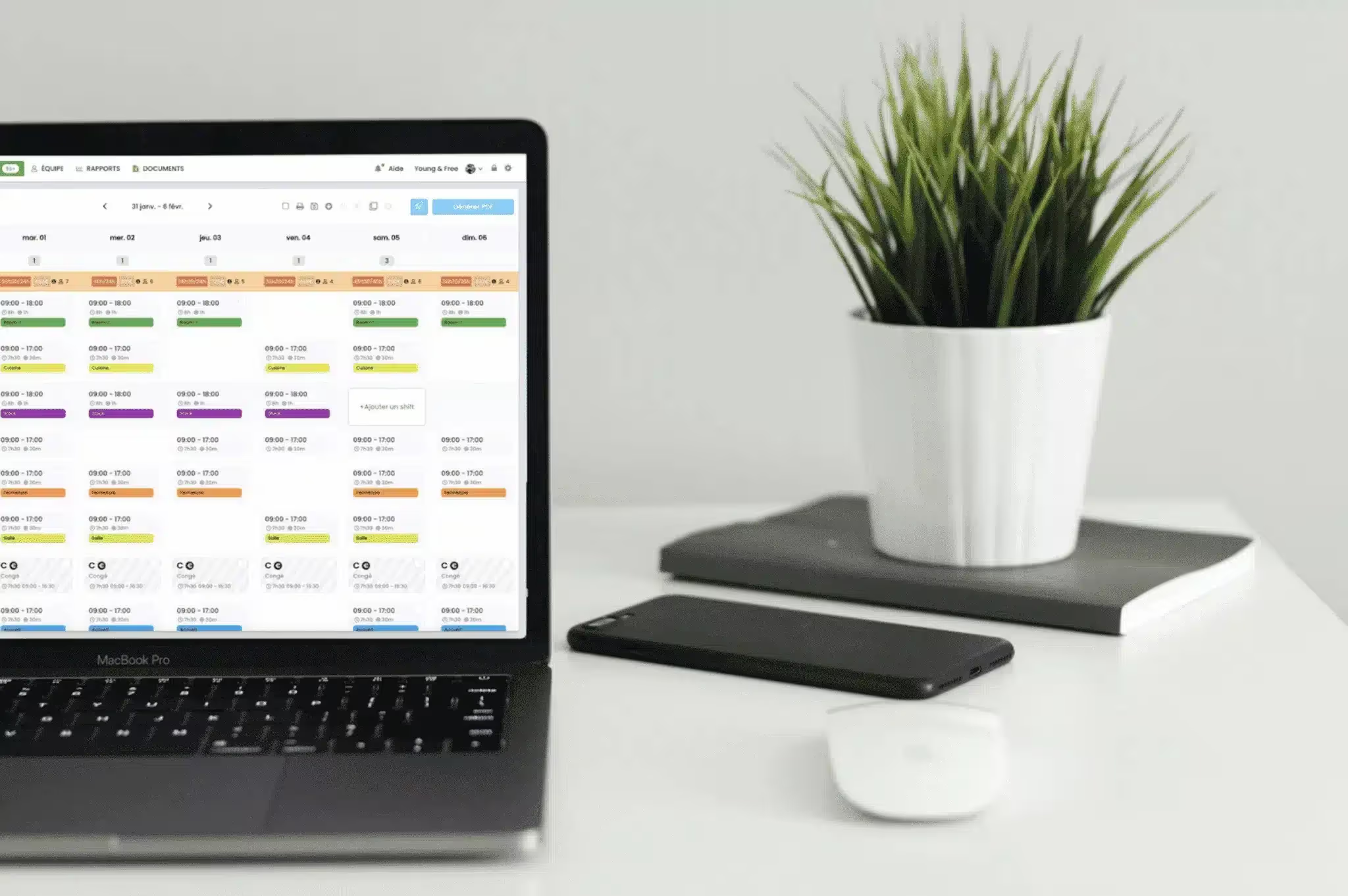
The Belgian hospitality sector employs over 300,000 workers and operates on some of the tightest margins in any industry. For café and restaurant owners and managers, staff management is the operational challenge that most directly determines whether the business survives or thrives. From last-minute absences during the Friday evening rush to complex multi-contract shift patterns, seasonal demand swings, and strict Belgian labor law compliance obligations, managing hospitality personnel requires tools and systems that can match the pace and complexity of the sector.
Managing staff in cafés and restaurants: the core challenges
Cafés and restaurants face a distinctive and compounding combination of workforce management challenges that make them among the most demanding HR environments in Belgium. Annual staff turnover rates of 40 to 60% in some segments create a perpetual recruitment and onboarding burden. Highly variable customer demand — between lunch and dinner service, between weekdays and weekends, between January and August — requires rapid staffing flexibility that rigid scheduling systems cannot accommodate. A workforce mix of full-time permanent employees, part-time workers, students on favorable social contribution regimes, and occasional event staff, each with different legal statuses and scheduling rules, adds a compliance dimension to every roster decision.
Shyfter assists in managing personnel in cafés and restaurants by consolidating all scheduling needs into a single digital solution that reduces administrative burden, accurately records working hours, manages leave requests, tracks absences, and assigns shifts — while maintaining the compliance audit trail that Belgian social inspections require.
Time tracking: the legal and operational foundation
Accurate time tracking is both a legal requirement and a financial necessity in hospitality. Belgian employers must maintain records of actual working hours for all employees, and in the horeca sector, the potential for cash handling and tip-related disputes makes precise hour documentation particularly important. Disputes about actual hours worked are among the most common sources of formal employee complaints in the sector.
Employees can clock in and out using the Shyfter Staff mobile app or Shyfter POS on a tablet at the entrance to the premises. Each team member uses a personal PIN to record their presence, ensuring that work hours are accurately documented from the moment of arrival to the moment of departure. This data integrates directly with payroll calculations, eliminating manual timesheet errors and significantly reducing the administrative burden on management at the end of every pay period.
Scheduling for the full complexity of hospitality staffing
A scheduling system for cafés and restaurants must handle the genuine complexity of hospitality staffing in a single interface. Fixed schedules for core permanent kitchen and floor staff, flexible patterns for part-time workers who are available on different days from week to week, student contracts with specific maximum hour rules and annual quota tracking, and casual availability pools for high-demand event coverage — all of these must be managed simultaneously without the manual overhead that spreadsheet scheduling creates.
Digital scheduling platforms allow managers to build weekly schedules visually with coverage at a glance, assign available shifts to staff who have indicated their availability, manage minimum and maximum hours for student workers automatically, send schedule notifications to all staff simultaneously via mobile app, and allow staff-initiated shift swaps subject to manager approval. This shifts significant scheduling administration from manager-initiated to employee-initiated, freeing management time for the operational and guest-facing activities that actually drive revenue.
Leave management and absence handling in practice
In a café or restaurant, a single unplanned absence on a busy Friday evening or a summer Sunday lunch creates an immediate operational problem with direct impact on service quality and revenue. Effective absence management requires both reactive capability — quickly identifying and contacting a replacement from a pre-vetted availability pool — and proactive planning: tracking absence patterns over time to identify team members at high burnout or disengagement risk before they produce the unplanned absence that disrupts service.
Digital leave management allows staff to submit leave requests through a mobile app at any time, gives managers immediate visibility of the coverage implications of approving or denying a request, and maintains a historical record of absence patterns that supports both workforce planning and performance conversations with team members whose absence frequency is affecting team operations.
Belgian labor law compliance for horeca employers
Belgian hospitality employers operate under joint committee 302, which governs minimum wage levels, overtime pay rates, weekend and public holiday premiums, and the critical advance schedule communication requirement: variable work schedules must be communicated at least 5 working days in advance. Schedule changes made after this deadline can require payment of a schedule modification indemnity to affected employees. Student worker hours must be tracked against the annual 475-hour favorable social contribution quota. Social inspectors conduct routine and unannounced visits to hospitality establishments and request scheduling records as a standard part of their compliance review.
A scheduling platform configured for Belgian horeca labor law automates compliance checks, flags potential violations before schedules are published and communicated to staff, and maintains the timestamped audit trail that demonstrates good-faith compliance effort to inspectors.
Practical tips for café and restaurant managers
- Publish weekly schedules at least 5 working days in advance as required by Belgian joint committee 302 — use a digital tool that timestamps publication automatically
- Build and maintain a pre-vetted pool of flexible staff for last-minute coverage — students and occasional workers with confirmed availability and completed onboarding
- Use historical sales and reservation data to forecast demand by day and session and build staffing levels around actual need rather than habit
- Implement digital clock-in to eliminate payroll errors and prevent the timesheet disputes that are common in cash-handling hospitality environments
- Review absence frequency patterns monthly and address recurring patterns proactively before they affect team morale and service quality
- Track student hours against their annual 475-hour quota weekly to prevent inadvertent transition to the full social contribution regime
Frequently asked questions
What are the advance notice requirements for scheduling in Belgian restaurants?
Under joint committee 302, Belgian restaurant and café employers must communicate variable work schedules at least 5 working days in advance. Schedule changes made after this deadline may trigger a schedule modification indemnity payment to affected employees. All working hours must be recorded and accessible for social inspection on demand, and total working hours must respect EU Working Time Directive maximums. Digital scheduling platforms configured for joint committee 302 automate these compliance requirements.
How do you manage student workers compliantly in cafés and restaurants?
Student workers in Belgium may work up to 475 hours per calendar year under a favorable social security contribution rate of approximately 5.42% for the employer. Employers must track student hours carefully against this annual limit — hours above 475 attract full employer contributions of approximately 25%, a significant cost increase. A scheduling platform that tracks cumulative student hours in real time and alerts managers before the threshold is approached is an essential compliance tool for any hospitality business employing multiple students throughout the year.
What is the most effective way to reduce staff turnover in Belgian hospitality?
The three most consistently effective turnover-reduction levers in Belgian hospitality are schedule predictability (communicating shifts well in advance and minimizing last-minute changes), management quality (investing in supervisor training in basic people management skills), and recognition (consistently acknowledging good performance in specific, public ways). Digital scheduling tools that give staff advance visibility and input into their schedules directly address the first lever, which is the most operationally tractable of the three.
Can a small independent café afford a digital scheduling tool?
Yes. Modern scheduling platforms are priced for small businesses with per-user or per-location pricing that makes them accessible to independent operators managing as few as 5 or 6 team members. The time saved on manual roster building each week, the reduction in payroll processing errors, the compliance protection from automatic legal checks, and the reduction in scheduling-related staff conflicts typically deliver a clear and measurable return on investment within the first month of use for most Belgian hospitality operators.
Shyfter was built for Belgian hospitality. From digital clock-in and mobile schedule management to joint committee 302 compliance and student hour tracking, Shyfter consolidates all staff management into one platform — saving managers hours every week and giving staff the schedule transparency they expect. Start your free trial and see the difference in your first week of use.