

FOH Meaning: What Front of House Really Is in a Restaurant

Last updated:
10/7/2026
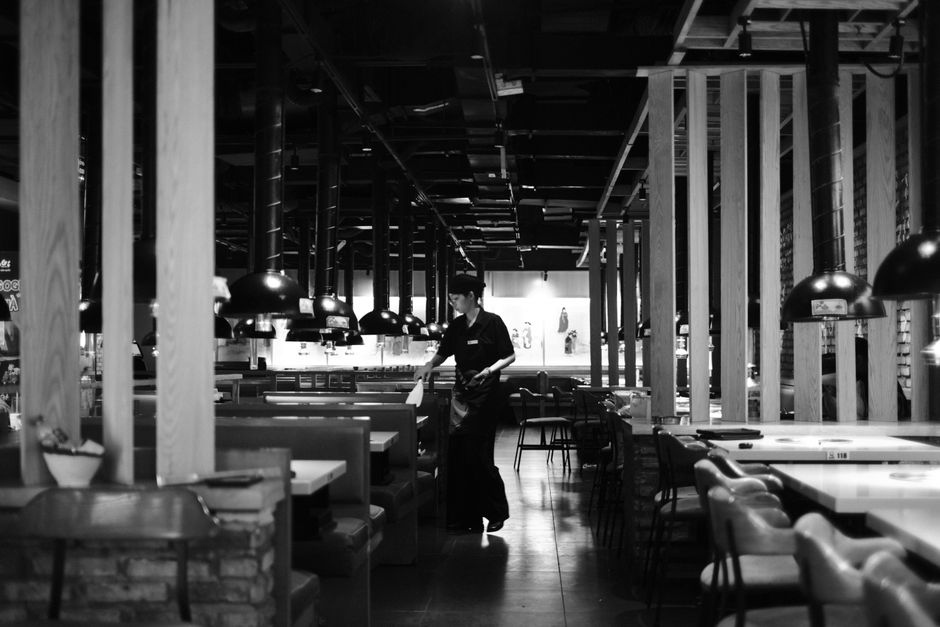
TL;DR: FOH means "front of house": every person and every space a guest sees, from the host stand to the dining room to the bar. It is the half of a restaurant that sells the experience. This guide breaks down what FOH means, how it differs from BOH (back of house), the roles that live inside it, and why it is the hardest part of any schedule to get right.
Table of contents
- What FOH actually means
- FOH vs BOH: where the line sits
- The FOH roles, position by position
- What separates good FOH work from average
- Why FOH is the hardest part of the schedule
- Keeping FOH and BOH in sync
- Frequently asked questions
Walk into any restaurant. The person who greets you, the server who reads your table, the bartender building three cocktails while holding a conversation: that is front of house. FOH means front of house, the staff and the physical areas that guests actually see and interact with. If back of house is the engine, front of house is the whole car, the part customers judge, remember, and tip.
The term gets thrown around every shift, on schedules, in job posts, in the middle of a Saturday rush when someone yells "we need another FOH on the floor." But plenty of people work a year in hospitality before anyone explains where the line really sits. So let’s fix that.
What FOH actually means
FOH stands for front of house. It covers two things at once: the people whose job is to serve guests directly, and the spaces those guests move through. The dining room, the bar, the host stand, the waiting area, the patio, the restrooms. Anywhere a customer can stand, sit, or wander counts as front of house.
The people side is what most searches for "foh meaning" are really after. Front of house staff are the ones in contact with the guest for the length of the visit. Hosts, servers, bartenders, bussers, food runners, sommeliers, and the floor managers who keep all of them moving. Their product is not just the plate. It is the timing, the warmth, the recovery when something goes wrong.
Here is the part that trips people up. A dish can be perfect and the visit can still fail, because a table waited eleven minutes for water and nobody checked back. That gap is a front-of-house problem, not a kitchen one. FOH owns the experience layer, and the experience layer is where guests decide whether they come back.
Restaurants are a big enough industry that this distinction carries real weight. The National Restaurant Association puts the US sector at roughly 15.5 million employees and about $1.1 trillion in annual sales for 2024. A large slice of those workers spend their shift on the floor, in the FOH, and they are the reason a guest becomes a regular or never returns.
FOH vs BOH: where the line sits
If FOH is everything the guest sees, BOH is everything they don’t. BOH means back of house: the kitchen, the prep line, the dish pit, the walk-in, the office, the loading dock. Chefs, line cooks, prep cooks, dishwashers, and the kitchen managers who run them all live here.
The simplest test is line of sight. Could a guest, sitting at their table, watch this person do their job? If yes, it’s front of house. If the work happens behind the pass, it’s back of house. Open kitchens blur this a little, and that is on purpose; showing off the line is itself a front-of-house move.
The two halves run on different clocks. Back of house peaks during prep and plating. Front of house peaks at the door and the table, which is usually a beat later. A three-unit taco chain in San Diego we looked at last year had its kitchen fully staffed by 4pm and its FOH short two servers until 6, so the food was ready and the floor was not. Tickets sat under the heat lamp. Guests waited. The fix was not more cooks; it was moving two FOH shifts thirty minutes earlier.
Culture splits too. Kitchens tend to run on hierarchy and speed. The floor runs on read-the-room instinct and improvisation. Good operators respect both and never let one side think it carries the other. When the server blames the kitchen and the kitchen blames the server, the guest is the one who pays.
The FOH roles, position by position
Front of house is not one job. It is a small team of specialists who each own a slice of the guest’s night. The exact lineup depends on the concept; a 42-seat bistro in Austin might run one host and three servers, while a boutique hotel restaurant runs a full brigade. The roles themselves are fairly consistent.
The host, or the maître d’ in fancier rooms, controls the door. Seating, waitlist, reservations, pacing the flow so no single server gets slammed with four sat tables at once. We see owners treat this as an entry-level afterthought, and it is the mistake we run into most often. A weak host stand throws off the entire floor before a single plate leaves the kitchen.
Servers are the core of FOH. They take orders, guide choices, fire courses, read whether a table wants to linger or turn, and handle the check. A strong server is running four to six tables and holding a mental map of exactly where each one is in its meal. Bartenders do the same on a smaller footprint, plus they double as a service station and, often, the social center of the room.
Then there is the support layer that most guests never fully notice. Bussers clear and reset. Food runners get the plate from the pass to the table while it is still hot, which matters more than people think. In wine-driven rooms, a sommelier owns the list and the pairing. Above all of them sits the FOH manager or the general manager on the floor, expediting, fixing comps, and stepping onto any station that falls behind.
Front-of-house pay is a topic of its own, because so much of it runs through tips and service charges rather than base wage. The US Bureau of Labor Statistics counts roughly 2.2 million waiters and waitresses, most earning a blend of hourly pay and gratuities. If you are sorting out how that money moves, we broke down the difference between a mandatory add-on and a voluntary tip in our guide to service charge vs tip.
What separates good FOH work from average
Anyone can carry three plates. That is not the job.
The job is anticipation. A strong front-of-house team refills the water before the guest reaches for the empty glass, clocks the birthday table and sends a small surprise, notices the couple on a first date and gives them room. None of this shows up on a POS report. All of it shows up in whether the table comes back.
Recovery is the other half. Something goes wrong every service; a wrong order, a slow kitchen, a double-booked table. Guests forgive the mistake far more than they forgive the shrug. The best FOH people treat a problem as a chance to look competent, not as an accusation. That instinct is hard to teach and easy to spot.
And here is the quiet truth of the trade. Front of house is emotional labor, performed for hours, at speed, while smiling. Burnout is real, and it shows up in the numbers: the Bureau of Labor Statistics consistently records some of the highest quit rates of any sector in leisure and hospitality. A schedule that respects people, gives them the shifts they need, and does not spring changes on them at the last minute is not a nice-to-have. It is retention.
Why FOH is the hardest part of the schedule
Scheduling the kitchen is mostly about coverage. You need enough hands on enough stations for the covers you expect. Scheduling front of house is that, plus a dozen human variables the kitchen rarely deals with.
Section sizes have to match server skill. Your strongest server can take a six-table section; a new hire cannot, and if you seat them the same way, both the new hire and their guests suffer. Reservations spike unevenly, so a Tuesday and a Saturday need completely different FOH shapes. People swap shifts constantly, because tips make one Friday worth three Tuesdays and everyone knows it.
At Shyfter, we see the same pattern across restaurant clients: the schedule breaks at the FOH-to-BOH seam, not inside either team on its own. The kitchen is set, the floor is set, but nobody lined up the two, and the room goes sideways at 7pm. Concretely, that is a communication problem wearing a scheduling costume.
A few things make front-of-house scheduling less painful. Build sections and shift roles into the schedule itself, not into a manager’s head. Give staff a clean, fair way to trade hours instead of a chaotic group chat; our shift swap policy guide walks through how to set that up without losing control of coverage. And if you run any kind of rotation across day and evening service, keep it predictable, which is exactly what a rotating shift schedule is built to do.
The tool matters less than the principle. Put the information where the team can see it, and stop making the floor guess.
Keeping FOH and BOH in sync
The two halves of the house cannot work blind to each other. When the kitchen 86s a dish, the floor needs to know before a server sells it. When a twelve-top walks in on a slow Wednesday, the kitchen needs the heads-up before the tickets land all at once.
Most of this runs on the pre-shift meeting and the handover. A two-minute lineup before service, covering what is 86’d, what is being pushed, which large parties are booked, saves an hour of scrambling later. The problem is memory. By the third table, nobody remembers the verbal briefing. That is why written shift notes beat a rushed huddle every time; they stay put, and the closing team can read what the opening team left them.
The other piece is giving front-of-house staff their information in their own hands. A server should be able to check their upcoming shifts, see notes from the last service, and pick up an open shift from their phone between tables, not by calling the manager. That is the whole point of an employee app: it moves the schedule and the messages to where the team already is.
Worth remembering, none of this replaces good management. It just removes the friction that makes good management harder than it needs to be.
Frequently asked questions
What does FOH mean in a restaurant?
FOH means front of house. It refers to both the staff who serve guests directly, such as hosts, servers, bartenders, bussers, and runners, and the guest-facing spaces like the dining room, bar, and waiting area. In short, FOH is everything the customer sees and interacts with during their visit.
What is the difference between FOH and BOH?
FOH (front of house) is the guest-facing side: the floor, the bar, and the people serving customers. BOH (back of house) is everything guests don’t see: the kitchen, prep areas, dish pit, and storage, run by chefs, line cooks, and dishwashers. The simplest test is line of sight; if a guest can watch the work happen, it’s front of house.
What are the main FOH positions?
The core front-of-house roles are host or maître d’, server, bartender, busser, food runner, and, in wine-focused rooms, a sommelier. A front-of-house manager or general manager oversees the floor during service. Smaller restaurants combine several of these into one role, while larger operations run a full brigade.
Is a manager FOH or BOH?
It depends on the role. A floor manager, front-of-house manager, or general manager working the dining room is FOH. A kitchen manager or executive chef running the line is BOH. Many general managers move between both during a shift, which is part of why the job is demanding.
Which is harder to schedule, FOH or BOH?
Front of house is usually harder. On top of basic coverage, FOH scheduling has to account for server skill and section size, uneven reservation demand, heavy shift-swapping driven by tips, and the tight coordination needed with the kitchen. Kitchen scheduling is more about matching hands to expected covers.
The floor is where guests decide
FOH means front of house, and it is far more than a label on a schedule. It is the layer of a restaurant where the meal becomes an experience, where a mistake gets saved or sinks, and where a first-time guest turns into a regular. Get the food right and the floor wrong, and people still leave unhappy.
Running a strong front of house comes down to two things: hiring people who can read a room, and building a schedule that lets them do their best work without last-minute chaos. The first is on you. The second is what we build.
Shyfter handles front-of-house scheduling end to end: sections and roles baked into the schedule, clean shift swaps, shift notes that carry between services, and an app that puts it all in your team’s pocket. If your floor is still run on a spreadsheet and a group chat, book a free demo and we’ll show you what a calmer service looks like.