

Staff management in the fresh and frozen aisle

Last updated:
1/4/2026
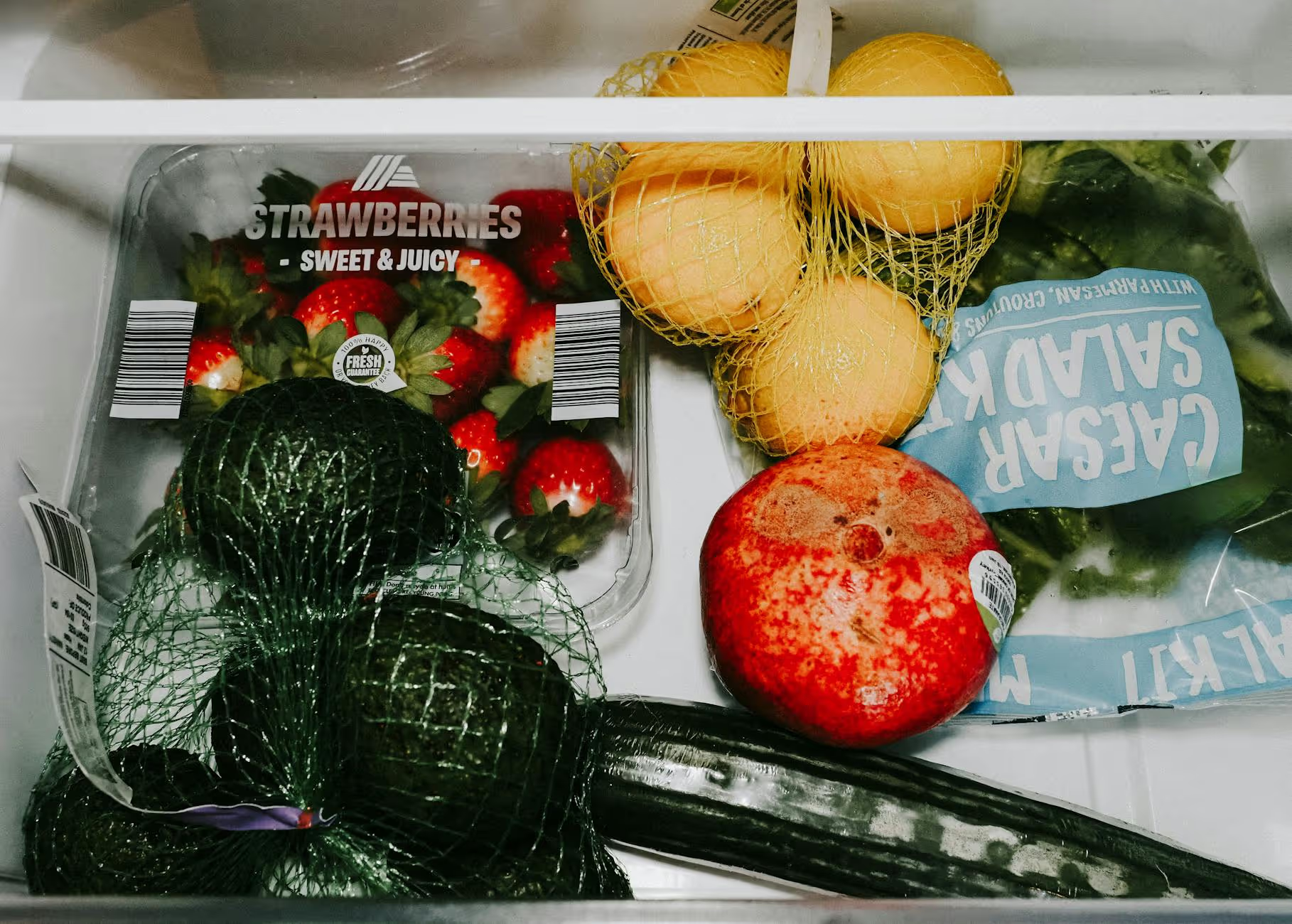
In brief: The fresh and frozen aisles are among the most demanding in any supermarket: morning deliveries from 6 a.m., strict cold chain compliance, FASFC (Federal Agency for the Safety of the Food Chain) standards, and specific skills in cutting and preparation. A poorly designed schedule is a food safety risk and a source of stock losses. Shyfter lets you schedule your teams by section, assign the right profiles to the right roles and guarantee compliance — all within a single tool connected to your payroll provider.
Why fresh and frozen require a dedicated schedule
The fresh aisle is not like any other department. It is an environment where time, food safety and skill requirements all converge. Scheduling this department the same way as the non-food aisle is a fast route to problems.
Staggered hours. Fresh product deliveries often arrive between 5 and 7 a.m. Someone must be there to receive them, check temperatures, store products correctly and prepare the shelves before the store opens. These are shifts that start well before standard hours.
Non-interchangeable skills. A staff member trained in butchery cannot be replaced by just anyone. Fishmonger staff have specific qualifications. Even stacking fresh produce requires knowledge of rotation rules (FIFO) and presentation standards.
High financial stakes. Fresh products carry higher margins than dry goods, but also higher losses when mismanaged. Insufficient staffing at the wrong moment means produce that spoils or fails to reach the shelf on time.
Morning deliveries: organising shifts from 6 to 8 a.m.
Receiving fresh produce is the starting point of the entire chain. It is a critical moment that determines how the rest of the day unfolds.
What must happen between 6 and 8 a.m.
- Receipt and inspection: check truck temperatures, inspect the condition of goods, validate delivery notes.
- Immediate storage: fresh and frozen products must be in the cold room within a strict timeframe. Every minute counts for the cold chain.
- Shelf preparation: remove expired or end-of-life products, apply markdowns, position new arrivals.
- Shelf stacking: fill shelves before the store opens so customers find full aisles from 8 a.m.
Scheduling the morning team
These early shifts require trained and reliable staff. Delays are not an option: if the delivery is not processed on time, the entire chain is disrupted.
With Shyfter, you create recurring shifts for the morning team (6–10 a.m. or 6 a.m.–2 p.m. depending on your organisation). Team members see their schedule on the mobile app and are alerted to any change. In the event of an absence, you activate the express replacement from your pool of qualified casual workers.
FASFC compliance: ensuring the right staff are on duty
The Federal Agency for the Safety of the Food Chain (FASFC, known in Belgium as AFSCA/FAVV) imposes strict rules on anyone handling foodstuffs. An FASFC inspection of your store is a real risk, and the penalties can be severe.
What FASFC requires
- Food hygiene training: every team member handling foodstuffs must have completed an accredited training course.
- Self-monitoring: documented procedures for the receipt, storage, preparation and sale of fresh products.
- Traceability: the ability to identify who handled what, and when.
- Medical fitness: certain roles require an up-to-date medical certificate.
The impact on your schedule
You cannot assign an untrained team member to the fresh aisle, even in an emergency. Your schedule must guarantee that every fresh aisle shift is covered by qualified staff.
In Shyfter, each team member has a competency profile. You define the required qualifications for each section (FASFC training, cutting certification, fishmonger qualification). When you schedule a shift, Shyfter only suggests people who meet the criteria. It is impossible to accidentally assign someone who does not have the right training.
Cold chain: team rotation and break management
Working in a cold room or frozen zone is physically demanding for staff. Working conditions are taxing and legislation governs exposure times.
Mandatory rotation
Team members working in the frozen zone (at -18°C or below) cannot remain there continuously for 8 hours. Regular rotations must be planned with warm-zone breaks. Your schedule must incorporate these rotations — not leave them to the discretion of the department manager.
Breaks and recovery
In addition to statutory breaks, work in a cold environment requires additional recovery time. Schedule rotation slots where a team member in the cold room is temporarily replaced by a colleague, then resumes their position.
Tracking hours in the cold zone
With Shyfter time tracking, you record hours spent in each zone. In the event of an inspection or a question from a team member, you have a precise record of time spent in demanding conditions.
Specific skills by fresh department
Each sub-department within the fresh section has its own requirements. An effective schedule reflects this reality.
Butchery and delicatessen
Cutting, preparation, weighing, customer advice. The butchery requires specific professional qualifications. Qualified staff are rare and difficult to replace. Your schedule must guarantee continuous coverage during counter opening hours.
See our dedicated guide on supermarket schedule management for multi-department best practices.
Bakery and patisserie
Bakers often start before 5 a.m. so that bread is ready for opening. Bakery scheduling is a topic in its own right, with its own constraints around baking, preparation and rotation.
Fishmonger
Very early delivery receipt (sometimes from 4 a.m.), enhanced food safety requirements, counter with customer advice. Fishmonger staff are often the most specialised and the most difficult to replace.
Fruit and vegetables
Fewer qualification requirements, but physically demanding work: handling crates, sorting, stock rotation, waste management. The fruit and vegetable department requires volume of staff, particularly in the morning for shelf stacking.
Frozen aisle
Regular restocking from the cold room, temperature checks, stock rotation. Staff must be equipped and trained for work in a cold environment.
How Shyfter manages the fresh department schedule
Shyfter is designed to handle the multi-department complexity of a supermarket. For the fresh department, several features make a real difference day to day.
Sections by sub-department
Create a section for each sub-department: butchery, bakery, fishmonger, fruit and vegetables, frozen, dairy. Each section has its own staffing requirements, specific hours and required competencies.
Competency profiles
Each team member has a profile with their qualifications: FASFC training, cutting certification, cold room fitness. When you schedule a shift, only qualified profiles appear. No risk of assigning someone with the wrong skills.
Compliance alerts
If a training certification is about to expire or a medical certificate needs renewal, Shyfter alerts you in advance. You avoid situations where a team member is on duty without a valid qualification.
Coordination with logistics
Fresh product deliveries arrive at set times. Your goods reception schedule must be synchronised with your logistics and stock team's schedule. Shyfter gives you a consolidated view of all departments to prevent gaps.
Export to payroll provider
Hours worked, early morning premiums, cold room hours: everything exports automatically to your payroll provider (SD Worx, Securex, Acerta and 50+ connectors). No double entry, no payroll errors.
Optimising the cost of the fresh department
The fresh department often represents 30 to 40% of a supermarket's payroll, due to staggered hours, required qualifications and early morning premiums.
Identify unproductive hours. A butcher being paid to stand behind the counter with no customers between 2 and 4 p.m. is a cost you can reduce. Analyse footfall by time slot and adjust staffing accordingly.
Plan for multi-skilling. A team member trained in both the fresh aisle and shelf stacking can be assigned differently depending on the day's needs. This flexibility reduces idle time.
Anticipate seasonal peaks. Christmas, Easter and summer all increase demand for fresh products. Prepare your seasonal reinforcements in advance to avoid the extra cost of last-minute replacements.
See our full analysis of labour costs in food retail for further detail.
FAQ — Fresh and frozen aisle staff management
What training is mandatory for fresh aisle staff?
In Belgium, every team member handling foodstuffs must have completed a food hygiene training course that meets FASFC requirements. For specialist roles (butchery, fishmonger), additional professional qualifications are required. Shyfter records each team member's qualifications and alerts you when a training course needs to be renewed, so your schedule is always compliant.
How do you schedule cold room rotations?
Plan rotations every two to three hours maximum for staff in the frozen zone. In Shyfter, create shifts with alternating time blocks: two hours in the cold room, one hour in a temperate zone (shelf stacking, goods reception). This rotation respects working conditions and maintains productivity. Time tracking allows you to record actual hours spent in each zone.
How do you manage replacements in the fresh aisle when staff are specialised?
This is the main challenge in the fresh department: you cannot replace a butcher with just anyone. Build a pool of qualified replacements in Shyfter (casual workers with FASFC training, trained students). In the event of an absence, the system automatically filters replacements who have the required skills for the role. For highly specialised roles (butchery, fishmonger), always plan for a trained reserve person in your weekly schedule.