

Logistics and stock scheduling in hypermarkets

Last updated:
2/4/2026
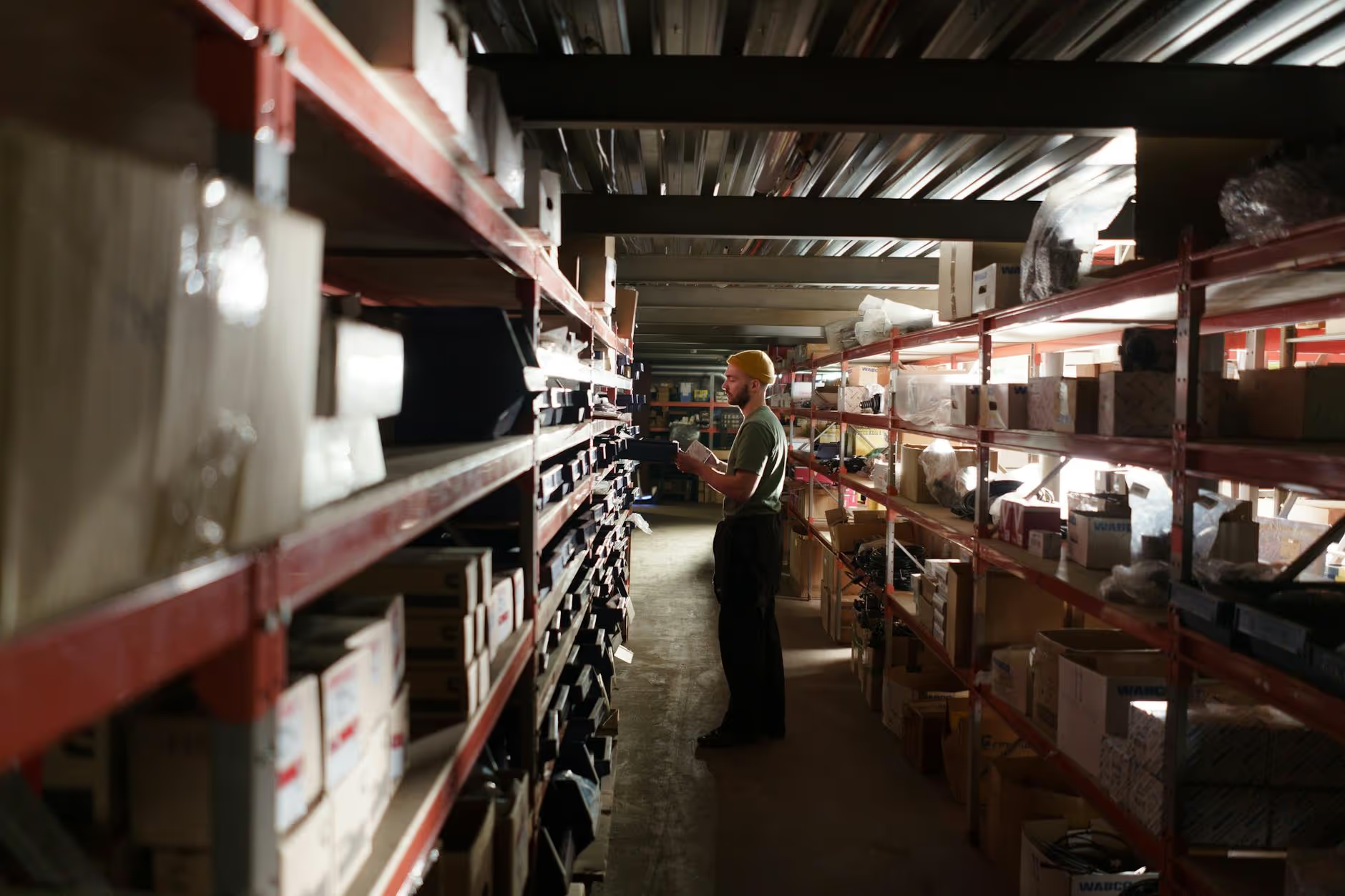
In brief: Logistics and stock management are the invisible engine of a hypermarket. Loading bay reception, overnight restocking, cyclic stocktaking: these operations require dedicated teams, often on staggered hours. A poorly organised schedule means shelf gaps, unprocessed deliveries and spiralling costs. Shyfter lets you coordinate your stock teams with the rest of the store, plan night and early morning shifts, and track hours worked in real time.
Logistics in a hypermarket: a critical cog
Customers see full shelves. They do not see the 3 to 5 lorries unloaded every morning, the pallets sorted, the cartons moved to the right aisle, the stock verified. Yet this invisible logistics operation is what keeps a hypermarket running.
Stock and logistics teams often work staggered hours: early in the morning, late in the evening, sometimes overnight. Their schedule looks nothing like that of the cashiers or department managers. And yet it must be perfectly coordinated with the rest of the store.
A good logistics schedule guarantees that shelves are full when the store opens, deliveries are processed on time and stocktaking is completed without disrupting store operations.
Loading bay schedule: synchronising with deliveries
The loading bay is the entry point for all goods. It is a position where timing is critical.
Coordinating shifts with delivery slots
A hypermarket receives between 3 and 8 deliveries per day, depending on its size and suppliers. Each delivery has a scheduled slot: fresh products often arrive between 5 and 7 a.m., dry goods between 8 a.m. and midday, beverage pallets in the early afternoon.
Your reception schedule must align with these slots. Trained staff must be in place at the right moment: someone to verify delivery notes, operate the pallet truck, check temperatures for fresh products, sort and dispatch goods to the correct storage areas.
Managing delivery surprises
Lorries sometimes arrive early or late. A supplier may deliver a larger volume than expected. These surprises demand flexibility in the schedule. With Shyfter, you define coverage windows on the bay (for example, 5 a.m. to 2 p.m.) with a guaranteed minimum headcount and additional staff that can be activated as needed.
Overnight and early morning restocking teams
In many hypermarkets, the bulk of restocking is done outside opening hours. This makes sense: no customers in the aisles, no trolleys to navigate, faster and more efficient work.
Night shifts: what to plan for
Night teams generally work between 10 p.m. and 6 a.m. They have a specific role: unloading pallets delivered at the end of the day, restocking dry goods shelves, reorganising shelf layouts, preparing the next day's promotions.
Night work is governed by Belgian legislation: pay premiums, mandatory rest periods, limits on consecutive nights. Your schedule must comply with these constraints. Shyfter integrates Joint Committee 118 rules and automatically calculates premiums for night work.
Early morning shifts: the race before opening
Early morning teams (5–9 a.m. or 6–10 a.m.) take over from the night team. Their mission: finish restocking the shelves, set up promotions, check best-before dates on fresh products, ensure the store is ready for opening.
These early shifts often consist of a mix of full-time workers on fixed hours and students or part-timers for reinforcement. Schedule management must take account of the varying availability of each profile.
Cyclic stocktaking: scheduling without disrupting the store
Stocktaking is a management obligation and often a scheduling headache. A hypermarket carries out partial stocktaking every week and a full inventory at least once a year.
Weekly partial stocktaking
Each week, one or more aisles are counted. This requires dedicated staff, often outside opening hours or very early in the morning. The schedule must provide for these stocktaking slots in addition to regular shifts.
Annual full stocktake
The annual stocktake mobilises the entire store, often on a Sunday or a closing day. It is an event requiring specific planning: counting teams by zone, validation supervisors, data entry staff.
In Shyfter, you create a dedicated schedule for stocktaking days, separate from the regular schedule. You assign teams by counting zone and monitor progress in real time via time tracking.
Coordination between back of house and sales floor
Logistics and sales are two worlds that must work together. A schedule that treats them separately creates friction.
From stock to shelf: the critical handover
Goods unloaded in the reserve must reach the shelves at the right time. Too early and they clutter the aisles during peak hours. Too late and customers find empty shelves and go to a competitor.
An integrated schedule in Shyfter shows stock and sales floor shifts on the same screen. The manager can immediately see whether the restocking team finishes before the sales team arrives, or whether there is a gap in coverage.
The aisles that generate the most restocking
Beverages, cleaning products and dry grocery are the most logistics-intensive aisles: high volumes, full pallets, heavy manual handling. Their restocking requires more people and more time than the textile or electrical goods aisles.
Adjust your logistics headcount accordingly. A hypermarket that assigns the same number of people to beverage restocking and stationery restocking has a scheduling problem.
Logistics peaks: festive periods and promotions
Seasonal peaks do not only affect checkouts. Logistics is the first to feel the impact: delivery volumes increase well before the sales peak begins.
Before Christmas: the logistics rush
Deliveries for the year-end holidays begin 2 to 3 weeks before Christmas. Volumes double or triple. The loading bay runs at full capacity, storage areas overflow, and the stock team works reinforced hours.
Plan these reinforcements in advance. Recruit casual workers for logistics, not just checkouts. A congested loading bay means stock shortages at the worst possible moment.
Major promotional operations
Weekly or monthly promotions generate one-off delivery peaks. When your promotional leaflet features 500 pallets of washing powder on offer, someone must receive, store and shelf them.
Create schedule templates for promotional weeks in Shyfter. Duplicate them for each campaign and adjust based on the expected volume.
How Shyfter manages the logistics schedule
A hypermarket's logistics operation has specific needs that Shyfter covers natively.
Dedicated sections: bay, stock, restocking
Create sections for each logistics zone: loading bay, dry storage, cold room, preparation area, shelf stacking. Each section has its own hours, required headcount and competency profiles.
Scheduling staggered hours
Night and early morning shifts have specific rules: premiums, rest periods, maximum consecutive nights. Shyfter applies these rules automatically and alerts you if a schedule breaches regulations.
Consolidated multi-department view
Your logistics schedule and your sales floor schedule are visible on the same screen. You can immediately spot coverage gaps, overstaffing and coordination problems between the back of house and the sales floor.
Real-time hours tracking
Integrated time tracking lets you verify that your night team is complete, that bay reception shifts are covered and that actual hours match the schedule. Data exports automatically to your payroll provider.
Logistics casual worker pool
Build a pool of trained replacements for logistics: manual handling, pallet truck operation, stock management. When needed, send a notification in one click to available and qualified casual workers.
Controlling logistics costs
Stock teams represent a significant portion of the payroll, largely due to staggered hours and the associated premiums.
Optimise the ratio of night to day hours. Night work costs more. If part of the restocking can be done during the day (non-food items, for example), you reduce costs without impacting service.
Reduce overtime. A precise schedule with clear shift handovers prevents overruns. Shyfter alerts you when a team member approaches their overtime threshold.
Use the right contract mix. Full-time for base shifts, students and casual workers for reinforcements. Each contract type has a different hourly cost, and the right combination makes a real difference to your payroll.
See the complete guide to supermarket scheduling for an overview of multi-department scheduling.
FAQ — Logistics and stock scheduling in a hypermarket
How do you schedule night shifts in compliance with Belgian legislation?
Belgian legislation governs night work via Joint Committee 118 for food trade. Pay premiums apply automatically. The number of consecutive nights is limited and a minimum rest period between two shifts must be observed. Shyfter integrates these rules directly into the schedule: if you create a shift that breaches a legal constraint, you are warned before publishing. Premiums are calculated automatically for export to your payroll provider.
How do you coordinate deliveries with the staff schedule?
Start by listing the usual delivery slots for each supplier. Create reception shifts that cover these slots with a 30-minute buffer before and after. In Shyfter, the "loading bay" section shows your staffing requirements per slot. In the event of an unscheduled delivery or a larger-than-expected volume, activate a reinforcement from your pool of logistics-trained casual workers.
How do you manage stocktaking without disrupting store operations?
Schedule partial stocktaking outside peak footfall hours: early in the morning before opening or at the end of the day after the main traffic. For the annual full stocktake, create a dedicated schedule in Shyfter with teams assigned by counting zone. Time tracking lets you monitor who is present and in which zone. Holiday requests are blocked around stocktake dates to guarantee team availability.