

Hotel Schedule Management

Last updated:
1/4/2026
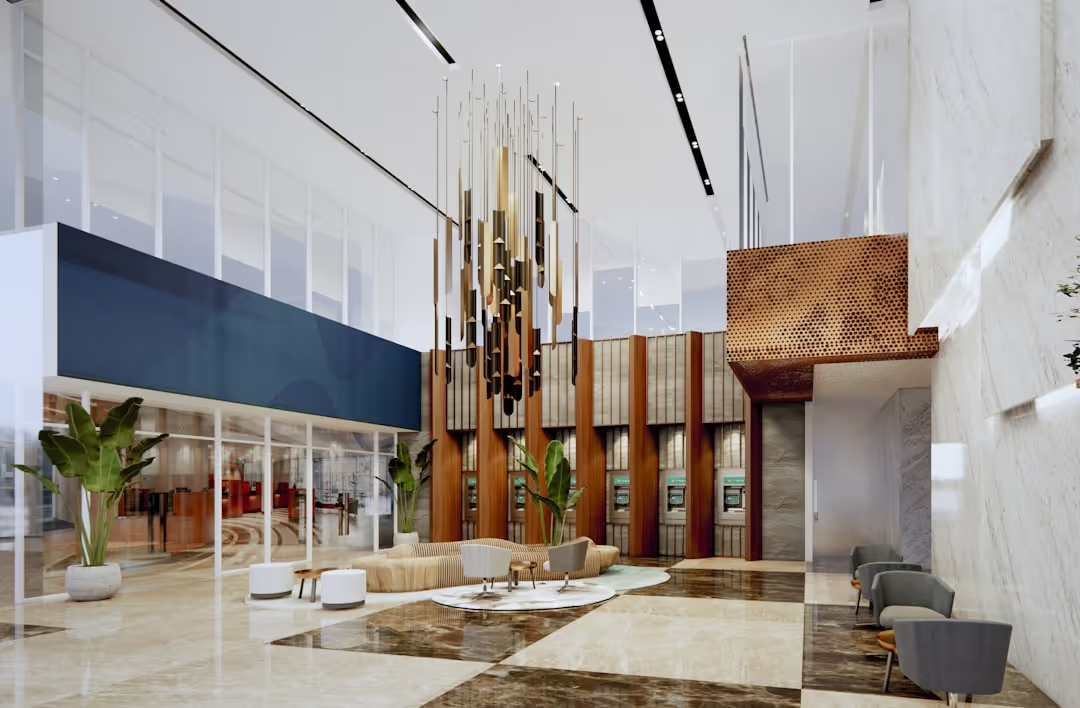
In brief: A hotel operates 24/7 with departments running on very different rhythms: front desk, housekeeping, kitchen, bar, spa, maintenance, events. Hotel scheduling must coordinate these teams, absorb seasonality and comply with the hospitality collective agreement (CP 302). This guide covers all the fundamentals: multi-department organisation, managing night shifts, seasonality, casual workers and social compliance. Shyfter centralises planning for all your departments in a single tool, built for the hotel floor.
Why scheduling is the pillar of hotel management
A hotel never closes. The front desk welcomes guests at 3am. Housekeeping prepares rooms in the window between 11am check-out and 3pm check-in. The kitchen runs from breakfast to late-night room service. The bar opens in the afternoon and closes after midnight. Each department has its own rhythm, its own peak activity and its own skill requirements.
Coordinating all this with an Excel spreadsheet works for a small 10-room establishment. Beyond that, errors accumulate: an uncovered night shift, a housekeeping team understaffed on a high-occupancy day, a 200-cover banquet without confirmed casual workers. Each scheduling error directly translates into degraded guest experience.
Hotel scheduling is not an administrative exercise. It is the operational tool that determines whether your establishment delivers smooth service or your teams are constantly firefighting.
Hotel scheduling specifics
24/7, 365 days a year
Unlike a restaurant or a shop, a hotel does not close in the evening. The front desk, security and certain services (room service, night audit) run continuously. This requires a rotating shift system on three slots: morning (6am–2pm), afternoon (2pm–10pm) and night (10pm–6am). Every shift must be covered, including weekends and public holidays.
This constraint has a direct impact on the headcount needed. To cover a single post 24/7, you need at least 4.2 full-time equivalents, accounting for weekly rest, leave and absences. Multiply by the number of posts to be continuously covered and you understand why hotel scheduling is complex.
Departments running on desynchronised rhythms
Housekeeping follows the check-out and check-in rhythm. The kitchen follows mealtimes. The bar has its own evening peaks. The spa operates on appointments. Events follow a banquet and conference calendar. These rhythms do not overlap: housekeeping's peak (10am–3pm) corresponds to a quiet period in the bar, and vice versa.
Good hotel scheduling accounts for these time offsets. It lets you view all departments on a single screen while allowing each department head to manage their team with their own constraints.
A complex contract mix
Hospitality simultaneously employs full-time permanent staff, part-timers, casual workers and students, seasonal staff and sometimes agency workers. Each contract type has its own rules: maximum hours, social contributions, notice periods, supplements. The schedule must integrate all these constraints to stay compliant.
In peak season, the ratio between permanent and flexible staff can reach 40/60. Managing this flexibility without losing control of costs or social compliance is the central challenge of hotel scheduling.
Organising the schedule by department
Front desk and reception
The front desk is the only department that runs continuously. Three daily shifts, seven days a week. The morning shift handles check-outs and concierge requests. The afternoon covers check-ins and the arrivals peak. The night shift handles the night audit, late arrivals and security.
Each shift requires different skills: the morning demands administrative rigour, the afternoon relational ease, the night autonomy and a command of the billing system.
Housekeeping and floors
Housekeeping is the most sensitive department to occupancy rate. With a hotel at 95%, each housekeeper must prepare 15 to 18 rooms between 10am and 3pm. At 40% occupancy, half the team is sufficient. The schedule must therefore adjust daily based on reservations.
The physical load is high. A fair distribution of rooms (accounting for suites, departures and stay-overs) is essential to prevent exhaustion and turnover.
Kitchen and restaurant
The hotel kitchen covers multiple services: breakfast (6am–10am), lunch (11:30am–2:30pm), dinner (6pm–10pm) and sometimes continuous room service. The head chef must plan brigades according to the forecast number of covers, which depends directly on occupancy and scheduled events.
Banquets and events add a layer of complexity: a 150-cover wedding on a Saturday evening needs reinforcements in the kitchen, dining room and dishwashing, often as casual workers.
Bar, spa and maintenance
The bar typically runs from 4pm to midnight or later. The spa on 9am–8pm appointment slots. Maintenance works during the day for planned work but must be reachable 24/7 for emergencies. These departments have smaller teams, but their schedules must be coordinated with the rest of the hotel.
Managing seasonality
Peak season: anticipate needs
Hotel seasonality varies by location. Coastal hotels peak in July–August. Ardennes establishments peak over Christmas and May bank holidays. City hotels follow the professional and cultural events calendar. In all cases, peak season requires a 30 to 50% staffing increase versus low season. The peak season schedule must be prepared at least two months in advance.
Low season: optimise costs
In low season, the objective is the opposite: reduce staffing without degrading service. Permanent staff leave is concentrated in these periods. Some departments operate on minimum staffing. Payroll cost per occupied room must stay controlled to preserve profitability.
CP 302 compliance: the rules for hotel scheduling
Basic obligations
The hospitality collective agreement (CP 302) governs working conditions in the Belgian hospitality sector. Key rules for hotels:
- Maximum working time: 9 hours per day, 38 hours per week on average
- Mandatory break: 30 minutes after 6 consecutive hours of work
- Weekly rest: minimum 1 day per week
- Schedule publication at least 5 working days in advance
- Supplement for Sunday and public holiday work
- Supplement for night work
Night work and split shifts
Night work concerns the front desk, night audit and security. Work between 8pm and 6am carries a supplement. Split shifts, common in the kitchen, must follow specific rules on break duration and the span of the working day.
Dimona declarations and casual workers
Each time a casual worker or student is put to work, a Dimona declaration must be filed. In hospitality, the volume of declarations is particularly high during event periods and peak season. A missing Dimona exposes the employer to social inspectorate fines.
Multi-department time-tracking
Tracking hours by department
Hotel time-tracking must break hours down by department. A casual worker who works morning breakfast and the evening banquet must be able to clock separately for each assignment. This granularity is essential for calculating payroll cost by department and managing profitability.
Digital time-tracking replaces paper attendance sheets. Every entry and exit is recorded with the relevant department, automatically synchronised with the schedule and exported to the payroll provider for payroll.
Coordinating teams day-to-day
Inter-department communication
In a hotel, departments are interdependent. Housekeeping must know which rooms have been vacated. The kitchen must know the forecast number of dinner covers. The front desk must know which rooms are ready for early check-ins. A centralised schedule, accessible via a mobile app, lets each department head see available staffing in other departments. This coordination prevents crisis situations.
Managing the unexpected
A hotel generates daily surprises: last-minute absences, unplanned group arrivals, technical failures, weather events changing reservations. The schedule must be flexible enough to absorb these variations without disorganising the whole operation. Having a pool of readily available and contactable casual workers is essential. Shyfter lets you contact available casual workers with one click and update the schedule in real time.
Key hotel scheduling indicators
Hours worked per occupied room
This is the basic productivity indicator in hospitality. A 4-star hotel typically sits between 4 and 6 hours worked per occupied room. A 3-star between 2.5 and 4 hours. Tracking this indicator allows detection of overstaffing or understaffing by period.
Payroll cost as a percentage of RevPAR
Payroll cost typically represents 30 to 40% of a hotel's revenue. Compared to RevPAR (revenue per available room), it allows performance comparison across periods and establishments.
Shift coverage rate
What percentage of scheduled shifts are actually covered without last-minute modification? A rate below 90% signals a structural problem: insufficient casual worker pool, too-high turnover, or schedule published too late.
Overtime by department
Unplanned overtime is a warning signal. If a department regularly accumulates overtime, the schedule underestimates needs. Better to adjust the schedule upstream than pay supplements downstream.
Moving from Excel to a dedicated tool
The limits of Excel in hospitality
Excel cannot handle the multi-department complexity of a hotel. One spreadsheet per department means multiple files to maintain with no consolidated view. Excel does not warn when a student exceeds 475 hours. It does not automatically calculate night supplements. It does not allow staff to check their schedule on mobile or swap shifts.
What a hotel scheduling software changes
- Multi-department view on a single screen
- Shift planning with automatic rotation
- Daily housekeeping adjustment based on occupancy
- Casual worker and student management with hour tracking and Dimona
- Digital time-tracking by department
- Automatic calculation of supplements (night, Sunday, public holidays)
- Mobile app for team members
- Export to the payroll provider
- Department and consolidated dashboards
Return on investment
A hotel scheduling manager spends an average of 6 to 10 hours per week building and adjusting schedules in Excel. With a dedicated tool, this falls to 2–3 hours. The saving is also measured in errors avoided: an uncovered night shift requiring emergency recall of an employee (with supplements), a casual worker not declared in Dimona generating a fine, an undetected student hour excess.
FAQ
How do you coordinate the schedule of multiple hotel departments in a single tool?
Each department (front desk, housekeeping, kitchen, bar, spa, maintenance) has its own schedule with its own shifts and constraints. Shyfter centralises all these schedules in a single platform, with a consolidated view for management and filtered views by department for each department head. Hours, costs and availability are visible in real time for the entire establishment.
How far in advance should the hotel schedule be published?
CP 302 requires a minimum of 5 working days. In practice, hotels that publish the schedule 10 to 14 days in advance experience fewer absences and better team satisfaction. For housekeeping, a daily adjustment based on occupancy is needed alongside the baseline schedule. The key is setting a framework schedule early enough, then adjusting variable staffing (casual workers, students) based on actual occupancy.
How do you adapt the hotel schedule between peak and low season?
In peak season, increase staffing through seasonal contracts, casual workers and extending part-time hours. Prepare this scale-up at least two months in advance. In low season, concentrate permanent staff leave, reduce variable staffing and adjust opening hours for secondary departments (spa, bar). Track hours worked per occupied room to maintain productivity in both cases.